
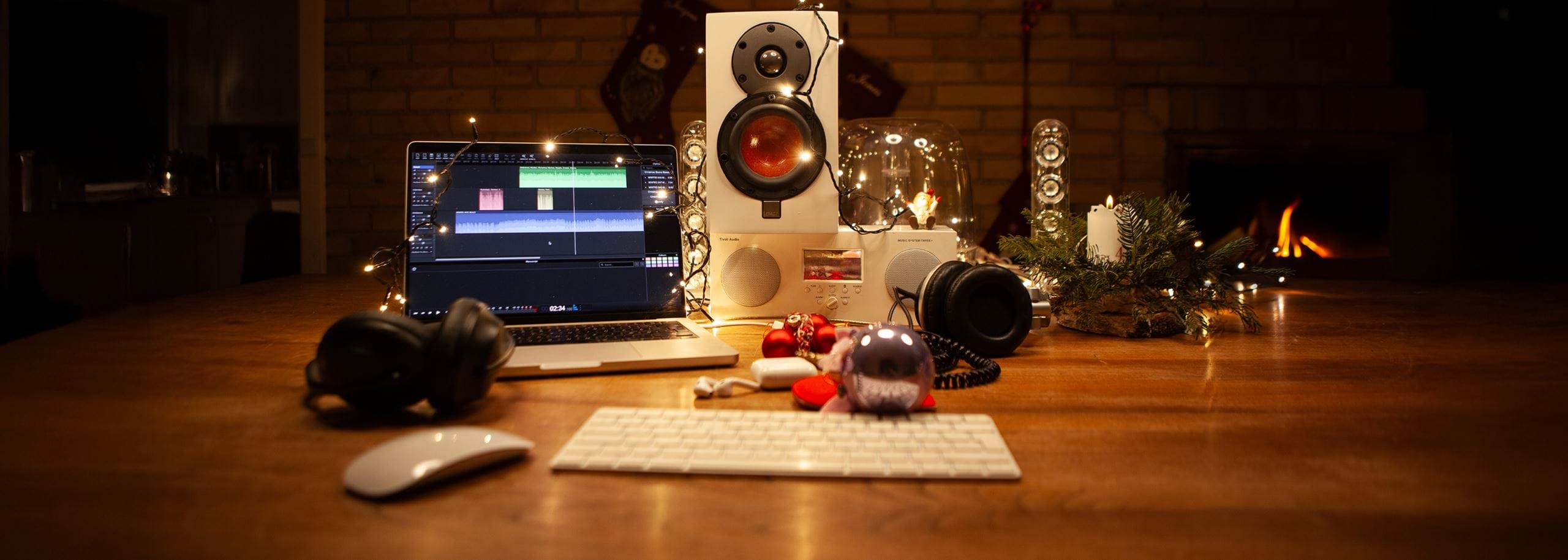
The Twenty-Second Day of Christmas
By Nick Dunkerley
🎄 We’re almost there! Your story is shaped, paced, and balanced.
Now it’s time for the final touches: sound treatment and testing.
Like giving a Christmas gift its final bow, this step ensures everything comes together perfectly so your story shines wherever it’s heard.
Sound treatment is often misunderstood.
People think they need to strip away all background noise and imperfections, leaving a sterile recording.
But stories, like life, aren’t perfect.
We’re looking for clarity, not sterility.
The goal is simple: remove anything that distracts from the listening experience.
If there’s a faint hum from an air conditioner, use noise reduction to clean it up.
If levels fluctuate wildly, apply compression to smooth them out.
If voices sound muddy or dull, tweak the EQ to restore warmth and natural tone.
🎧 Pro Tip: Remember, as we mentioned earlier, you shouldn’t have recorded distracting sounds in the first place. Like an air conditioner humming in the background. That said, if they’ve slipped through, this is your chance to fix them.
In a professional mixing studio, engineers don’t rely on just one set of speakers.
They typically have multiple sets:
A large set for rich, full detail.
A medium set to simulate standard playback devices.
A small set to mimic tiny speakers where the sound is more limited.
The mix needs to strike a balance that works across all systems.
Engineers flip between speaker sets to find a compromise.
Something that sounds great on big speakers but is still clear on smaller ones.
It’s not perfect, but it works for most listeners.
Now, in today’s world, there’s even more to think about:
Headphones:
Test your mix on different types of headphones.
Studio quality and basic earbuds.
Real-life spaces:
Consider where people will listen.
Cars, kitchens, Bluetooth speakers, or noisy commutes.
If you don’t have access to a professional studio, don’t worry.
If you’re working with just a laptop and a pair of headphones, here’s what to do:
Switch between devices:
Play your mix through your headphones, then through your laptop’s built-in speakers.
Yes, laptop speakers sound terrible. That’s the point.
If your story is clear and understandable even in the worst conditions, you’ve nailed it.
Try different headphones:
If possible, test on both high-quality headphones and regular earbuds.
Think like your audience:
Would someone listening in a car, a kitchen, or on a phone still hear the story clearly?
🎧 Pro Tip: You’re not aiming for perfection. Just balance.
If it works on the nice speakers and the not-so-great ones, you’re golden.
Audio storytelling has rhythm and character. Don’t over-polish it.
A few subtle imperfections can add warmth and authenticity.
What matters most is that your audience can focus on the story itself, without being pulled out by distracting noise or an uneven mix.
🎁 Today’s Challenge:
Apply basic sound treatment to your story.
Clean up distracting noise (but don’t sterilise it), use EQ to shape the sound, and apply compression to balance the levels.
Test your mix on:
Your headphones and laptop speakers.
Any other devices you have access to, like earbuds or Bluetooth speakers.
Imagine the listener in a car or noisy kitchen—would they still follow the story?
Make small, thoughtful tweaks.
Is your story clear, warm, and balanced across devices?
🎄✨Tomorrow: We’ll wrap it all up.
Your story is ready to shine, and it’s almost time to share it with the world.

I use Hindenburg Pro 2 daily and appreciate its versatile features that streamline my workflow and make the entire process seamless.
Hindenburg PRO for storytellers
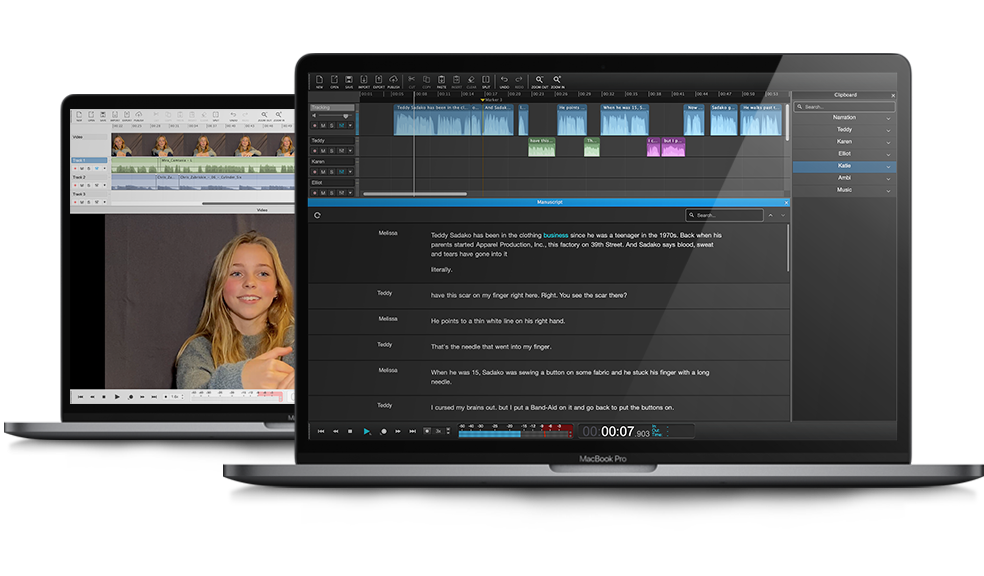
At Hindenburg, we're all about the story. Our tools are designed specifically with audio storytelling in mind, giving you everything you need to navigate and edit complex stories seamlessly. From Multitrack recording, transcriptions, clipboards, sound libraries and publish tools - Hindenburg Pro has you covered.
If you are considering a life in audio, then begin with a 30 day trial of Hindenburg PRO.
Stay sharp - join our newsletter and be first in the loop on new stories, updates and blogs.