

The Seventeenth Day of Christmas
By Nick Dunkerley
🎄 You’ve written your narration, weaving together soundbites, ambience, and transitions to guide your listeners through the story.
Now it’s time to step up to the mic and bring your words to life.
Delivering narration isn’t just about reading.
It’s about performing.
Your voice sets the tone, pace, and emotional connection for the audience.
So, grab your woolen scarf, settle in front of the microphone with a steaming mug of cocoa or mulled wine, and let’s dive into the art of narration.
Your voice is an instrument, and like any instrument, it performs better when warmed up.
Hydrate:
Drink water consistently throughout the day to keep your vocal cords flexible and your mouth moist.
Stretch:
Relax your neck and shoulders.
Gently hum or sing scales to wake up your vocal range.
Tongue Twisters:
Loosen your mouth and tongue with classics like:
“Unique New York, Unique New York.”
“Red leather, yellow leather.”
Face Exercises:
Stretch your jaw and cheeks.
Try exaggerated lip trills or yawning to open up your voice.
Your posture and positioning can make a big difference in how your voice sounds.
To Stand or Sit?
Standing gives you better breath support and energy.
Sitting can help with calm, conversational delivery.
If you sit, keep your back straight and shoulders relaxed.
Use Your Diaphragm:
Breathe deeply into your belly for stronger, steadier support.
Mic Placement:
Speak slightly to the side of the microphone to avoid plosives (the harsh “p” and “b” sounds).
Keep the mic about a hand’s length away for the clearest sound.
Experiment with both standing and sitting to find what works best for your voice and the tone of your story.
Narration is more than just reading aloud; it’s about making your words come alive.
Pace Yourself:
Don’t rush. Speak slowly enough for listeners to absorb what you’re saying but not so slowly that they lose interest.
Use Pauses:
Strategic pauses can add drama, emphasize key points, or give listeners time to reflect.
“Maria’s Christmas is filled with laughter. [pause] James’s? It’s the sound of waves crashing on the beach.”
Be Expressive:
Match your tone to the emotion of the story. If it’s joyful, let that warmth come through.
If it’s reflective, soften your delivery.
Maintain Consistency:
Keep your voice even throughout the recording.
If you’re feeling tired, take breaks to avoid changes in energy or tone.
Smile while you speak.
Even if it’s a serious topic, a slight smile can add warmth to your voice.
Even the best narrators don’t get it perfect on the first try.
The key is knowing how to handle retakes efficiently.
Let the Tape Roll:
Pause for a moment, repeat the line, and continue recording.
This keeps your flow intact and simplifies the process.
Punch-In Recording:
If your DAW supports it, punch in to replace specific lines as you go.
This can save editing time later but requires more focus during recording.
For a short feature like this, letting the tape roll is often the easiest and most effective option.
You can refine your performance naturally and polish it during editing.
Even with preparation, recording narration can come with a few hiccups:
Mouth Clicks:
Stay hydrated and take breaks as needed.
Chewing sugar-free gum or eating a green apple can help.
Brush your teeth or use mouthwash before recording.
Plosives:
Speak slightly off-axis from the mic, and use a pop filter to reduce harsh “p” and “b” sounds.
Fading Energy:
Stand up, stretch, or take a short walk to refresh your voice and focus.
Rehearsing your script aloud is essential to refining your delivery.
Mark Your Script:
Highlight where to pause, emphasize, or smile. Add notes for tricky words or phrases.
Do a Test Run:
Record a small section and listen back. Check for pacing, tone, and any technical issues.
Refine Your Performance:
Adjust based on what you hear. This is your chance to experiment and find your flow.
Don’t rush!
It’s better to record slowly and carefully than to rush and need endless retakes.
🎁 Today’s Challenge
Bundle up with your favorite holiday beverage, grab your script, and start recording your narration.
Practice delivering with warmth and clarity, and don’t stress about retakes.
Just let the tape roll and stay in the moment.
🎄✨ Tomorrow: We’ll polish your narration with editing techniques to bring everything together seamlessly.

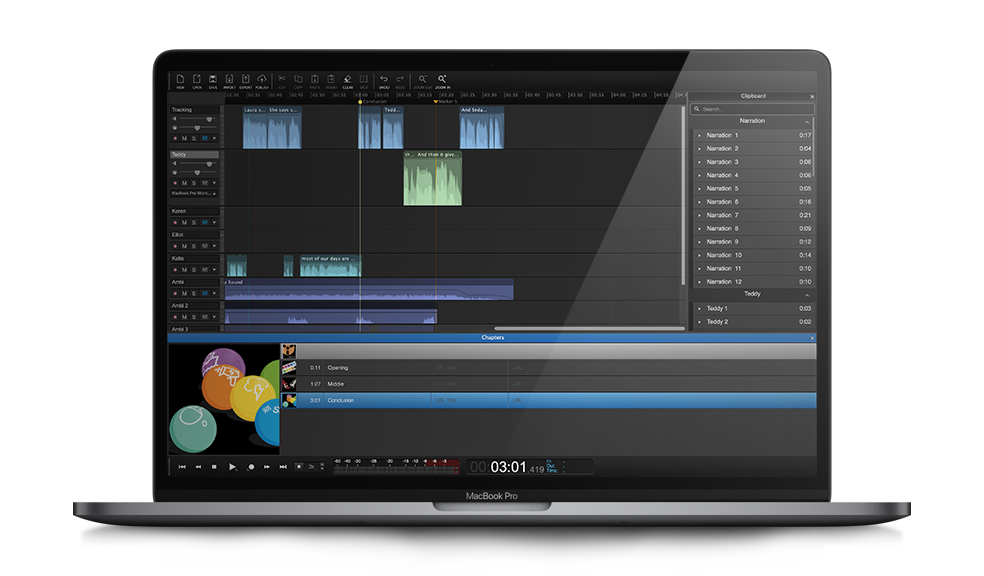
I personally use Hindenburg because it is the best software for my needs as a freelance journalist, podcast producer and media trainer. But my favourite thing about Hindenburg is their attitude.
Hindenburg PRO for storytellers
At Hindenburg, we're all about the story. Our tools are designed specifically with audio storytelling in mind, giving you everything you need to navigate and edit complex stories seamlessly. From Multitrack recording, transcriptions, clipboards, sound libraries and publish tools - Hindenburg Pro has you covered.
If you are considering a life in audio, then begin with a 30 day trial of Hindenburg PRO.
Stay sharp - join our newsletter and be first in the loop on new stories, updates and blogs.