
The Fourteenth Day of Christmas
By Nick Dunkerley
🎄 We’ve talked about capturing interviews, ambience, and all the sounds of your story.
Now, it’s time to sift through your recordings and uncover the gold: soundbites.
But why are soundbites so important?
Soundbites are the highlights of your story.
The pieces of tape that stand out and resonate.
They’re the parts that best convey the emotions, authenticity, and essence of your narrative.
Think back to when you were directing your story earlier.
This is the moment where you pull out the most compelling elements to bring that vision to life.
The role of soundbites depends on how you’re telling your story:
1. Guest-Driven Stories
• If the story unfolds mainly through your guest’s voice, look for longer stretches of dialogue.
These can be woven together to create a cohesive, engaging narrative.
2. Narration-Led Stories
• If you’re narrating the story, your soundbites might play a supporting role, adding authenticity and grounding the piece in real voices and moments.
Here’s an example:
Narrator: Christmas is celebrated in countless ways around the world.
Guest 1, male: “We always meet in the afternoon for mulled wine.”
Guest 2, female: “I haven’t celebrated the holidays in years. I travel far away to escape it all.”
Guest 3, child: “I LOVE IT, I LOOOOOVE CHRISTMAS!”
Narrator: Depending on culture, religion, and family traditions, the sounds of the holidays can range from this…
[Sound: Clinking glasses]
Narrator: …to this…
*[Sound: Airplane taking off]
Narrator: …to this.
*[Sound: Running feet on carpet]
To tell this story, you need to locate all the pieces: interviews, ambient sound, and scene-setting details.
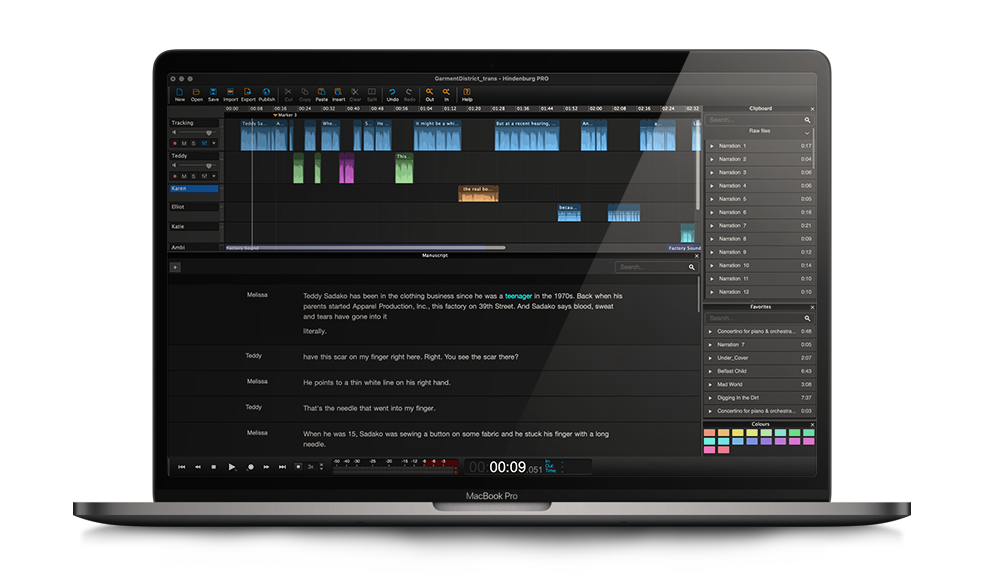
This is where your clipboard, or any organisational tool, becomes your best friend.
1. Interviews
• Listen to your guest’s recordings and pull out moments that stand out.
Quotes, anecdotes, or emotional reactions.
• If your DAW has a clipboard feature, snip and rename these clips as you go, adding them to a dedicated group.
Label each snippet clearly (e.g., “Guest 1 - Mulled Wine Quote”).
2. On-Location Sounds
• Review sounds you recorded while interacting with your guest. For example, sounds of the kitchen, laughter in the living room, or the shuffle of footsteps in the snow.
• Add these to your clipboard as well, grouped under categories like “Kitchen Sounds” or “Living Room Atmosphere.”
3. Ambient Audio
• Don’t forget the broader ambience you captured, from glass clinking to the unique soundscapes of your guest’s environment.
These subtle layers will enrich your story later.
1. Authenticity Wins
• Look for moments that feel natural and real—where your guest speaks from the heart or reacts with genuine emotion.Embrace Variety
•. Gather a mix of soundbites: some short, punchy quotes and longer, reflective moments. This will give you flexibility when editing.
2. Revisit Your Structure
• Think about your story structure as you pull soundbites. Do these clips support your beginning, middle, and end?
3. Stay Organized
• Label everything clearly and keep similar clips grouped together. This will save you hours when you start assembling the story.
🎁 Today’s Challenge
Spend 30 - 45 minutes reviewing your recordings.
Use your clipboard (or timeline markers) to organise your best soundbites.
Create groups for interviews, on-location sounds, and ambience.
By the end of the day, you’ll have a clear sense of the materials you’ll use to shape your story.
Tomorrow, we’ll take these soundbites and begin the process of initial editing.
Piecing together the first threads of your narrative.
🎧 Pro Tip: Not all your soundbites will make it into the final story.
But the process of finding them will ensure you’re equipped with everything you need to craft something unforgettable.

Hindenburg is a great tool for our radio production in Indigenous languages around the world
Hindenburg PRO for storytellers
At Hindenburg, we're all about the story. Our tools are designed specifically with audio storytelling in mind, giving you everything you need to navigate and edit complex stories seamlessly. From Multitrack recording, transcriptions, clipboards, sound libraries and publish tools - Hindenburg Pro has you covered.
If you are considering a life in audio, then begin with a 30 day trial of Hindenburg PRO.
Stay sharp - join our newsletter and be first in the loop on new stories, updates and blogs.